


Your Split Shipment Isn't Lost But Your Shopper Doesn't Know That

When one order ships in two boxes, the shopper judges it by the box that showed up first. Tell them the order is split, track each box out loud, and warn them before the late one slips. Do that and a split order stays a fulfillment detail that never reaches your helpdesk.
Key takeaways
- Last peak, 23% of shoppers had a package marked delivered that never arrived, according to Narvar + eTail Insights research. A split order produces the same panic when nothing is missing at all.
- Default shipped and delivered emails report on boxes, but shoppers think in orders. "I think it's lost" tickets start in the gap between the two.
- Four split shipment notifications close that gap: a split notice, per-box tracking, predictive delay alerts, and a delivery-anticipation email about 24 hours out.
- Jo Loves cut WISMO queries by 95% after moving past default Shopify notifications with Narvar Notify.
Your shopper can’t tell late from lost
A shopper orders a desk chair, a lamp, and a rug on a Monday in early December. The lamp and rug sit in one warehouse and the chair sits in another. So the order leaves as two parcels on two different days.
Thursday afternoon, a box lands on the porch and an email arrives with "delivered" in the subject line. The shopper opens the box, finds a lamp and a rug, and looks for the chair. There is no chair. They reread the email. It still says delivered.
Five minutes later, your team has a new ticket: "I think part of my order is lost."
Nothing is lost. The chair is on a truck one day behind, exactly where your fulfillment plan put it. The shopper had no way to know that, so they did the only thing left to them. They asked a person.
Multiply that exchange across every split order in peak and you get a helpdesk queue full of tickets about packages that were never missing.
Two tracking numbers, one worried shopper
A split shipment doubles the number of things that can go wrong in the shopper's eyes. Each box has its own carrier scans, its own delivery date, and its own chance to run late. But the shopper sees one order and one promise.
Narvar's research shows how frequently a single box already breaks that promise. Narvar + eTail Insights’ Delivering the 2026 Holiday Shopping Season report surveyed 1,348 US shoppers and 100 retailers. Last peak, 37% of those shoppers had a package arrive late. Another 37% saw the delivery date change after they purchased. And 23% had a package marked delivered that never arrived.
A split order runs two boxes through those odds. It also adds a failure of its own: a delivered email that's true for one box reads as false for the whole order. Our chair shopper files themselves under that 23%, even though the chair turns up a day later. (We broke down the questions shoppers ask between "shipped" and "delivered" in Why your support queue floods in December.)
Retailers feel the pressure from their side, too. In the same report, 66% of retailers ranked on-time delivery as a top-three peak challenge.
The pattern shows up in Narvar's sales conversations as well. One home furnishings retailer ships its products in several boxes. It described shoppers who opened the first delivery, started assembling a partial order, and assumed the rest had been stolen. Alerts for split shipments were its top reason for choosing Notify.
23% of holiday shoppers had a package marked delivered that never arrived. A split order recreates that moment even when every box is on its way. - Delivering the 2026 Holiday Shopping Season
Default emails track boxes while shoppers track orders
Most ecommerce platforms come with notifications built around two carrier events: shipped and delivered. Those two emails answer the shopper's easy questions and say nothing about the hard ones.
A shipped email for box one doesn't mention that a second box exists. A delivered email doesn't say which items were inside, what's still coming, or when. When box two hits a carrier delay, nothing goes out at all, because "running late" isn't an event the default stack sends.
Onia ran into exactly this. The swimwear brand was using Shopify's standard notification emails, and they couldn't keep up with how much its shoppers wanted to know. Onia's small team ended up fielding a stream of contacts from shoppers checking on their deliveries. After moving to Narvar, Onia cut WISMO by 18%.
The emails that prevent tickets are the ones defaults don't send. Across Narvar Notify programs, predictive delay emails average a 38% click-through rate and attempted delivery emails average 34%. Delivered emails average just 8%. Shoppers open the message that tells them something changed, and that same message keeps them out of your queue.
Four messages that keep a split order out of your helpdesk
Keep splitting orders. Split shipments exist for good reasons: faster delivery, inventory spread across locations, items that ship from different partners. What changes is how much the shopper hears about each box, at each step, before they have to ask.
1. Announce the split in the first shipping email
The first message after an order leaves should say plainly that it's coming in more than one package, and how many. We recommend a multi-shipment banner on the shipment confirmation for exactly this moment. A shopper who expects two boxes reads the first one as progress. A shopper who expects one reads it as a mistake.
2. Track every box on its own, and say what's in it
Each tracking number gets its own updates. Narvar Notify follows every shipment in an order on its own schedule. Box one and box two each trigger their own on-its-way, delay, and delivered messages. Pair each message with the items inside that box: "Your lamp and rug were delivered today. Your chair arrives Friday." One sentence answers the ticket before anyone writes it.
3. Warn about the late box before the shopper spots it
The box that falls behind produces the angriest ticket, because the shopper has already watched part of the order arrive. Notify's predictive delay, carrier delay, and missed delivery messages tell the shopper about the slip as soon as the carrier data shows it. For items that haven't left the building, fulfillment delay and carrier pickup delay messages cover the stretch before a tracking number exists.
4. Send a delivery-anticipation email about 24 hours out
A short heads-up the day before each box lands does two jobs. It confirms the delivery date for that box, and it reminds the shopper what's still in transit. Notify's delivery-anticipation email goes out around 24 hours before arrival, so the shopper hears from you before the doorstep surprise.
What fewer "it's lost" tickets are worth to a small team
At a growth-stage retailer, the support team is small. Every WISMO ticket competes with the tickets that need a person: a damaged item, a sizing question, a return that went sideways.
Jo Loves knows that math. Before Narvar, 80% of all customer support tickets at the UK fragrance brand were WISMO. The brand needed to grow digital sales without growing the support team alongside it. With Narvar Track and Notify running on Shopify, Jo Loves reduced WISMO queries by 95%.
Put a price on your own version. A single call-center contact can cost from $3 to $12. Pull the split-order and "missing item" tickets your helpdesk logged last November and December, then multiply by your cost per contact. A team that logged 500 of those $12 tickets spent $6,000 answering a question one email could have answered first. (For the full version of that exercise, pull this report before you hire holiday helpdesk temps.)
The shopper side of the ledger matters just as much. In our holiday shopping report, 44% of shoppers said order and delivery notifications would make them buy from a retailer again, and 68% rated on-time delivery "very important." A split order handled well tells the shopper you know where their things are, and that's the reason they come back.
Live before peak, without a rebuild
The usual objection from a lean team is timing. Peak is weeks away, and nobody wants a replatforming project in October.
On Shopify, Notify gets delay and exception alerts live before peak without a rebuild. Your brand carries into Notify's branded email editor. The pre-built message library already includes the split-order moments above: shipment updates, carrier delay, missed delivery, fulfillment delay, and delivery anticipation.
If your helpdesk runs on Zendesk, the Narvar Connect + Care app on the Zendesk Marketplace puts the order, each shipment's status, and the notifications the shopper already received inside the ticket. Agents can resend an email from there, too. On other helpdesks, the benefit lands upstream, because fewer split-order tickets reach the queue at all.
Make the second box part of the promise
Your operations team split that order to get products to shoppers faster. The shopper deserves to hear about that decision from you, in the first email, box by box, before the late one turns into a ticket.
Retailers that do this turn a moment that reads like a lost package into proof they know where every order is. That's the post-purchase promise at work: an order ends when the last box is home, and the shopper knows where each one is the whole way there.
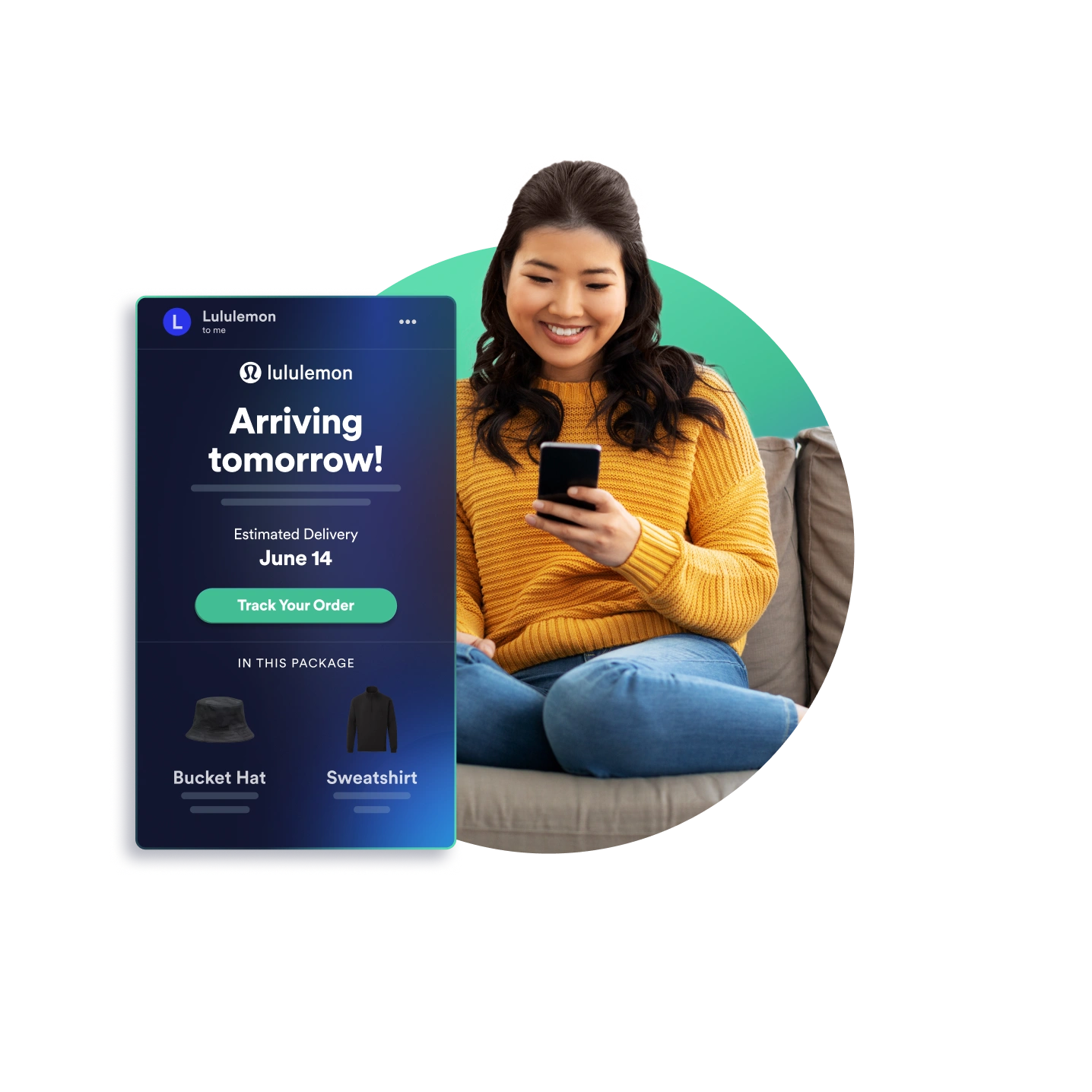
Learn to drive repeat customers by building trust.
Narvar Notify builds rapport through proactive communications every step of the way.

FAQs
What is a split shipment?
A split shipment is a single order that leaves in more than one package. This usually happens because items ship from different warehouses, stores, or partners, or on different days. Each package gets its own tracking number and its own delivery date.
Why do split shipments cause WISMO tickets?
The shopper thinks of the order as one purchase, but default shipping emails report on individual boxes. When one box arrives with a "delivered" email and the rest is still in transit, the shopper assumes something is missing and contacts support.
How should I notify customers about a split shipment?
Tell the shopper the order is split in the first shipping email, and say how many packages to expect. Then send updates for each package, naming the items inside it. Add delay alerts for any box that falls behind, and a delivery-anticipation email about a day before each box arrives.
What is a delivery-anticipation email?
It's a proactive message sent around 24 hours before a package is due. It confirms the arrival date and, for split orders, reminds the shopper what's still on the way. Narvar Notify includes it as a pre-built message type.
How much does a WISMO ticket cost a retailer?
A single call-center contact costs between $3 to $12. Multiply that by your peak-season order-status tickets to size the problem. Narvar's peak WISMO review walks through that math using your own helpdesk data.
Related posts