AI-powered delivery date estimates to boost conversion

Give shoppers peace of mind and protect and grow your bottom line

Personalized tracking experiences to build brand loyalty

Returns and exchanges management to mitigate fraud and reward best customers

Proactive communication to drive customer lifetime value

Delivery claim management to tackle fraud and build trust




All I Want For Christmas is Revenue: New Holiday Shopping Data Shows How to Earn It
.png)
Shoppers are heading into this holiday season with their guard up but spending anyway. Our survey of 1,348 US shoppers shows that where they spend comes down to what happens after they hit buy.
Key takeaways
- Holiday shoppers are nervous (65% feel anxious) but spending anyway (63% plan to spend more), and the experience after checkout decides who earns that spend.
- Delivery confidence is beating delivery speed. Price and shipping cost are losing ground to brand trust and a delivery date shoppers can count on. Keep free shipping, and pair it with an arrival date you can actually hit.
- Shipping protection is now table stakes. More than 4 in 10 shoppers had a package stolen, or marked delivered and never received, last season.
- Fast refunds close sales. Over half of shoppers have delayed a purchase because they worried about how long a refund would take, and instant refunds would make nearly 9 in 10 more likely to buy.
- Watch Gen X most closely. Shoppers aged 45 to 60 are the most cautious, highest-spending, most return-heavy, earliest to start, and the most likely to use AI to find gifts this year.
The forecast is soft but shoppers plan to spend
Retailers are walking into a season that's hard to read. The holiday forecast is soft: US retail sales for November and December are projected to rise just 4.1% according to eMarketer, the second year running that holiday growth has trailed the full-year average. Consumer pessimism is up 16% year over year per Salesforce, and 40% of retailers expect shoppers to be more price-conscious and deal-driven as a result.
So retailers are bracing for a pullback. Shoppers have other plans: 63% told us they expect to spend more this season, largely because prices are higher. Spending intent usually runs ahead of actual dollars, and this year is no exception. NRF has noted how far consumer sentiment has drifted from real spending. Still, the direction is clear. For retailers, the question has shifted from whether shoppers will spend to how to be the brand consumers choose.
That trust runs through everything our survey of 1,348 US shoppers surfaced this year.
The worry has moved to the doorstep
Whatever is making shoppers cautious this year, it shows up after checkout. But the economy is no longer the headline. Concern about tariffs and inventory shortages fell to 32.4%, and worries about delivery problems eased to 37.7%. The one fear that climbed is the most concrete one: Shoppers’ top concern is whether orders will arrive in time for gift-giving hit (45.7%). Just 9.3% report no shopping fears at all.
A shopper who trusts what happens after the sale will buy even while nervous. Take that trust away, and even a strong deal stalls. Post-purchase is where this season is won or lost.
Gen X will judge you on what happens after checkout
Trace this season's caution, spending, and returns back to their source, and you keep landing in the same place: the 45- to 60-year-old bracket, or Gen X.
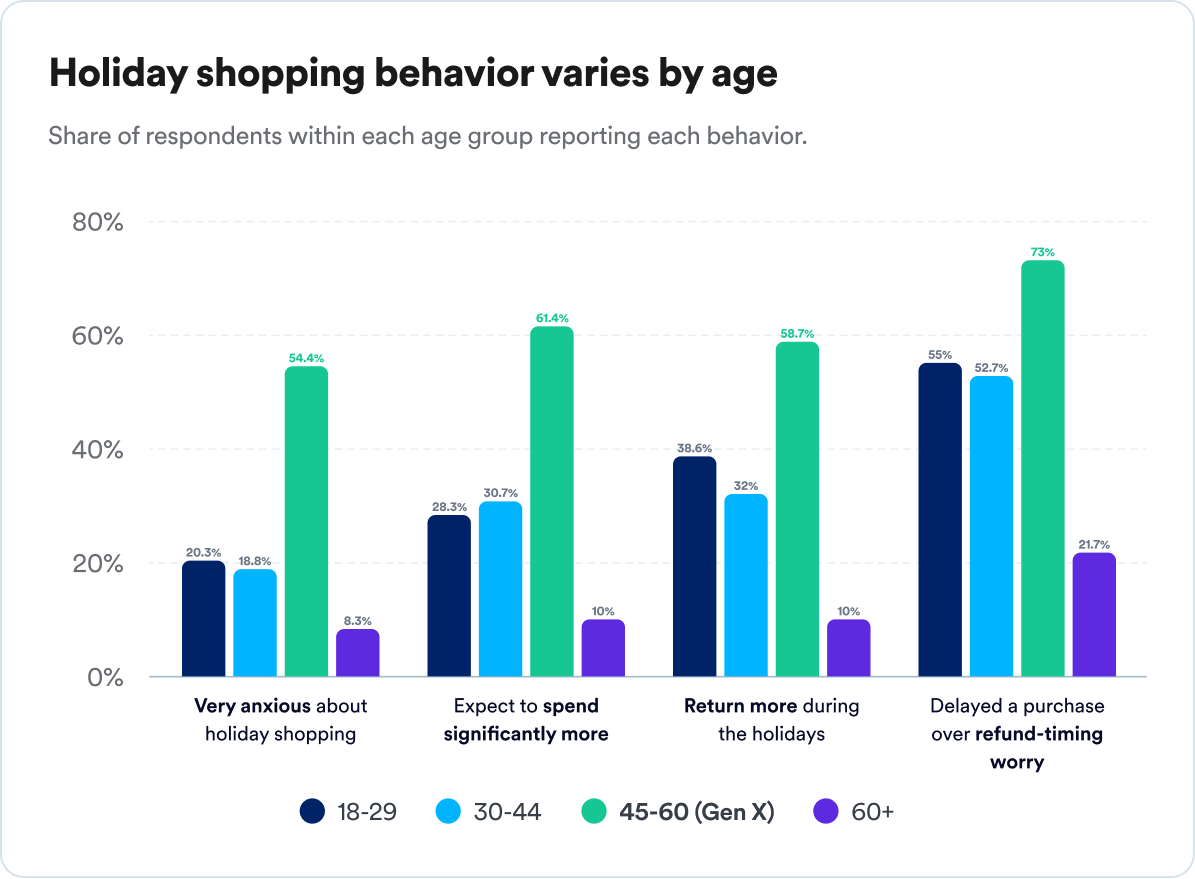
Gen X is the most anxious group by a wide margin, but instead of pulling back, they're leaning in. They plan to spend significantly more, return more over the holidays, and start earlier than anyone else. 74.5% say they're moving up their timeline this year, and 57.9% plan to use AI to find gifts, both the highest of any bracket.
They also treat returns and refunds as dealbreakers. 73% have delayed a purchase over refund-timing worry, 72% say instant refunds would make them far more likely to shop with a retailer, and 66% avoid brands that charge for returns outright, more than double the rate of 18-to-29-year-olds.
Add it up, and Gen X is the group to watch. They pay close attention to how the experience after checkout goes, and they act on it. Build for them, and you build for everyone.
Is your post-purchase experience ready for peak?
Take the 8-question assessment and see where you stand in about five minutes.
Shoppers reward your post-purchase playbook
Shoppers were specific about what earns their trust. Four moves matter most.
1. Lead with delivery confidence, not speed
Price still matters to shoppers. Free shipping remains one of the most-cited purchase factors, and 76% would accept slower delivery to get it. But it carries less weight than a year ago. Product price, discounts, and shipping cost all fell as purchase drivers this year, while brand and post-purchase factors like return costs and refund options held or grew. The experience after the sale now counts for as much as the sticker price.
What moves shoppers now is a delivery date they can believe. Offering a real choice of delivery options and then hitting the promised date with Narvar Promise does more for conversion than out-spending competitors on speed. Harry Rosen saw this firsthand. After replacing broad, static delivery windows with Promise's precise, order-specific estimates, the retailer reached 90% delivery-date accuracy and lifted conversion by 13 percentage points on harryrosen.com.
2. Make shipping protection table stakes
For a lot of shoppers, porch piracy is now a line item of holiday shopping. Last season, 18% had a package stolen off the doorstep, and another 23% were told an order was delivered when it never arrived. Together, more than 4 in 10 did everything right and still ended up empty-handed.
This year, they're planning around it. Nearly 7 in 10 rate shipping protection against lost or stolen packages as very important when deciding where to buy, almost as high as accurate delivery dates themselves. Narvar Secure, proactive delivery alerts, and a fast, low-friction fix when something does go missing all do one job: They turn a worry into a reason to trust you.
3. Turn returns into a reason to buy
Returns are now routine. The share of shoppers returning something every one to three weeks nearly doubled year over year, from 14% to 24%. Holiday habits are splitting, too. A bigger share plan to return more over the holidays (37.8%), a bigger share plan to return less (22.6%), and "about the same" (once the majority answer) has fallen to 39.6%. There's no single holiday-returns norm anymore.
For a shopper, a return is the audition for the next sale, not the end of the last one. Over half have delayed a purchase worried about refund timing, and instant refunds would make nearly 9 in 10 more likely to buy. A clear, fast, low-effort return path is one of the best ways to convert a cautious shopper and earn the repeat.
4. Meet AI shoppers where they are
More shoppers are bringing AI into their holiday, led by Gen X, but it's far from universal and it doesn't equal trust. Shoppers over 60 are the clear holdouts, with 68% saying they won't use AI for holiday shopping at all. The goal isn't to push AI on everyone. Make it easy for shoppers who want AI-assisted discovery and support, and keep the traditional path just as easy for those who don't.
What this season really comes down to
Shoppers are being careful this year and spending anyway, so they're looking for retailers who earn their spend. Chasing the deepest discount means competing on ground that matters less than it did a year ago. Retailers win by treating every moment after checkout, from the tracking update to the refund, as a chance to turn wariness into loyalty.
That's as true for the 22-year-old as the 62-year-old, and for the shopper who found the gift through AI as much as the one who asked a friend. No group feels it more than Gen X, who are carrying this season's expectations.
For retailers, there’s one way to win peak season: Meet a cautious shopper with real reassurance, and you'll see them into the year that follows.
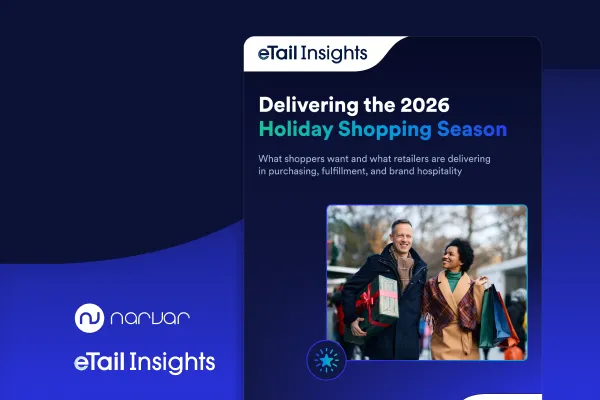
See how retailers and shoppers compare this holiday season
The full eTail Insights + Narvar 2026 holiday report pairs these consumer insights with responses from 100 retail leaders, so you can see where shopper expectations and retailer plans line up, and where they don't.

Frequently asked questions (FAQs)
What does 2026 holiday shopping data say about consumer behavior?
Holiday shopping data shows that 65% of shoppers feel anxious about the season, that they expect to spend more even amid that concern, and that they're increasingly weighing post-purchase factors like return policies and refund speed alongside price when deciding where to shop.
Which age group is most affected by holiday shopping anxiety?
Shoppers aged 45 to 60, Gen X, report the highest anxiety levels this season, and that caution shows up across the board. This group is also the most likely to spend more, return more, and start shopping earlier than any other age bracket.
Do shoppers actually spend more when they say they will?
Not necessarily. While 63% of shoppers expect to spend more this year, the annual online spend levels shoppers report haven't shifted year over year, which suggests spending intent often runs ahead of actual behavior.
How important are returns and refunds to holiday purchase decisions?
Very. More than half of shoppers say they've delayed or avoided a purchase because of uncertainty about refund timing, and a majority say they'd be more likely to shop with a retailer that offers instant refunds.
Are shoppers using AI for holiday shopping this year?
Yes, though adoption varies by age. Shoppers aged 45 to 60 report the highest planned use of AI for gift discovery, while shoppers 60 and older are the most likely to opt out of using AI for their holiday shopping entirely.
Related posts