AI-powered delivery date estimates to boost conversion

Give shoppers peace of mind and protect and grow your bottom line

Personalized tracking experiences to build brand loyalty

Returns and exchanges management to mitigate fraud and reward best customers

Proactive communication to drive customer lifetime value

Delivery claim management to tackle fraud and build trust




Stop the Steal: How to Outsmart Today’s Porch Pirates

Today’s cautious consumers will jump ship at the first sign of uncertainty, which makes dependable post-purchase experiences essential for earning loyalty.
Key takeaways
- Shoppers increasingly expect brands to anticipate their needs, providing proactive support and seamless experiences long after checkout.
- IRIS™ gives retailers the intelligence to distinguish loyal customers from bad actors, enabling more personalized decisions and support at scale.
- Agentic technology transforms the post-purchase journey by anticipating needs, personalizing outcomes, and resolving issues before they escalate into problems. NAVI, for example, guides shoppers in real time with proactive communication, helping reduce uncertainty and create a frictionless experience.
Don’t let pirates plunder your profits.
Get the insights that help retailers protect packages and loyalty.
Today’s pirates don’t sail the seas. They stalk front porches and swipe everything from holiday gifts to everyday essentials.
And shoppers know it. That fear shows up in their buying behavior long before the package ever arrives. Even the slightest whiff of trouble on the horizon can make shoppers abandon ship.
The good news? Retailers don’t have to let porch pirates run off with the treasure; there are clear, effective strategies to keep deliveries protected.
As part of our 2025 State of Post-Purchase Report, we surveyed 3,461 U.S. consumers to understand how porch piracy affects purchasing decisions, and what retailers can do to safeguard packages, preserve trust, and keep revenue firmly on deck.
Trust is the real treasure
Retailers are operating in a moment defined by hesitation. Shoppers aren’t panicking. But they are pausing, scrutinizing, and second-guessing their decisions more than they have in previous years.
In January, the University of Michigan's Index of Consumer Sentiment registered 56.4. There is a modest bright spot: Sentiment ticked up 3.5 points from December, suggesting some stabilization after months of decline.
But the broader picture remains challenging. Confidence is still 21% lower than the same time last year and 32% below its long-term average, weighed down by persistent price pressure and concerns about the job market.
And when shoppers are this cautious, trust and certainty become prerequisites for every purchasing decision.
Today’s deliveries are at risk of being plundered
Unfortunately, trust is in jeopardy as porch piracy shifts from an edge case to an everyday concern. Today, 41% of shoppers report having a package stolen, and the problem is accelerating. In 2024 alone, more than 120 million packages were reported missing, a 34% year-over-year increase.
The financial impact is staggering. Stolen packages cost U.S. consumers an estimated $15 billion in the past 12 months. Retailers shoulder an even heavier burden, absorbing more than $22 billion in losses tied to replacements, refunds, and support costs. Together, porch piracy drove at least $37 billion in economic impact over the past year.
It’s more than just a porch problem: While 56% of theft victims have packages stolen from their front door, 44% say their packages were left in their mailbox or mail room, at their office, or with their doorman.
This reality adds a layer of anxiety to the shopping experience itself. With theft both widespread and unpredictable, 39% of consumers worry there will be issues with their order, making every online purchase feel just a little more precarious.
Trust drops when pirates prowl
In a cautious shopping environment, the fear of porch piracy becomes more than an inconvenience. It becomes a trust barrier that can stop a purchase altogether.
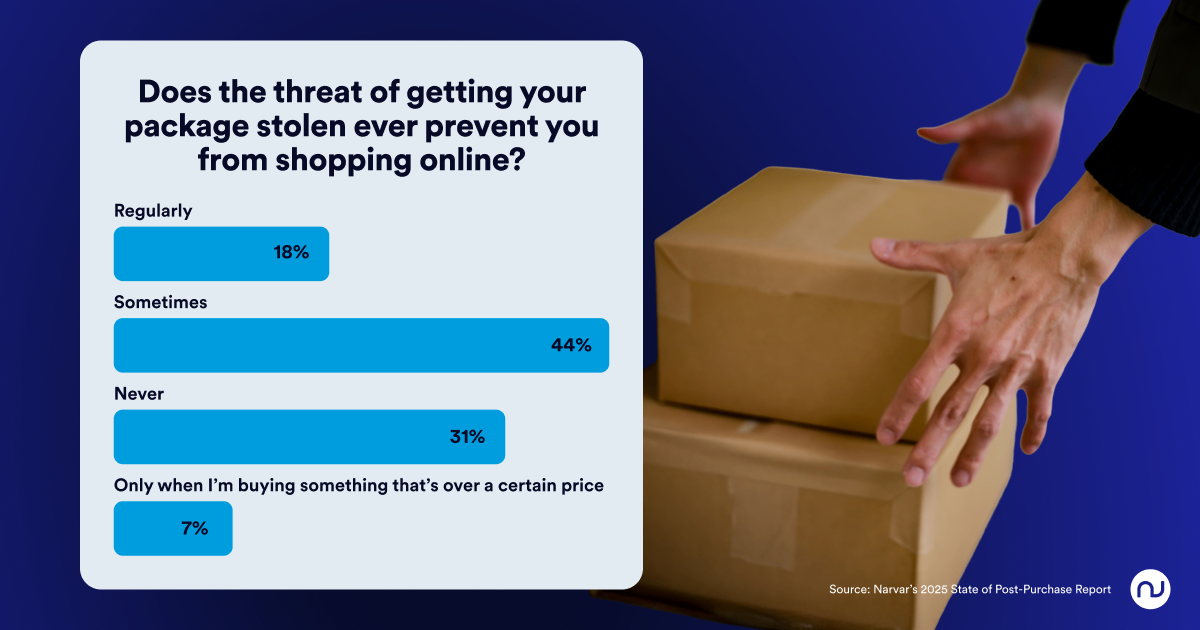
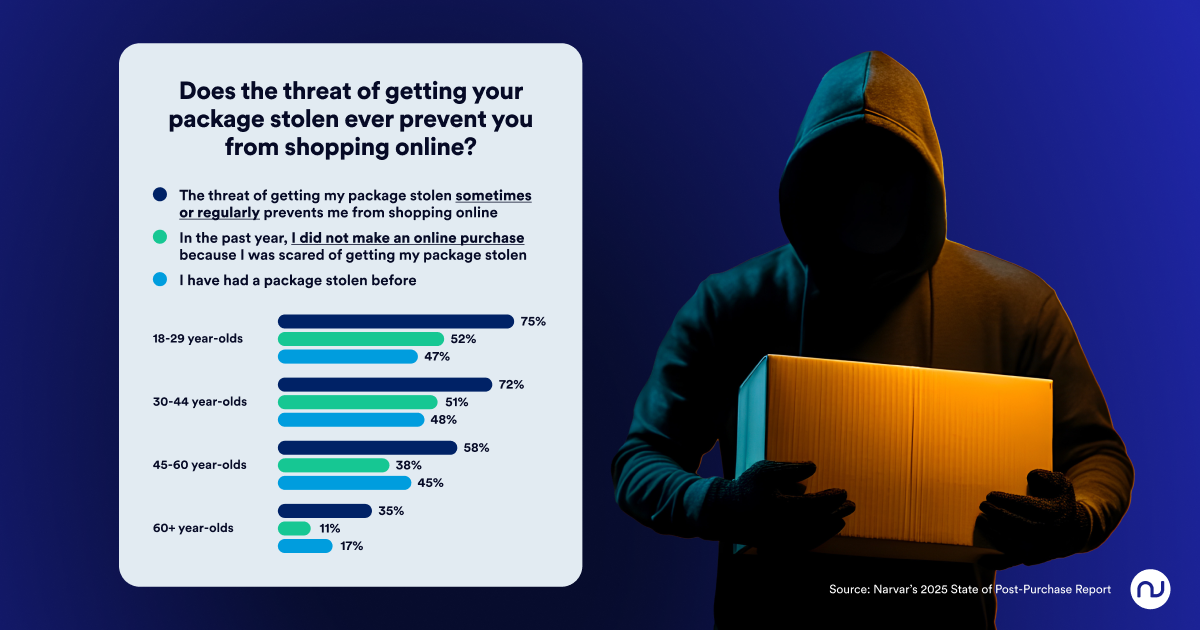
That hesitation is widespread. For example, 62% say the threat of porch piracy sometimes or regularly prevents them from shopping online. And 40% chose not to make an online purchase in the past year because they were scared their package would be stolen. When that many shoppers walk away before checkout, the message is clear: trust is on the line.
Younger consumers brace for rough waters
Younger shoppers are feeling the risk most acutely. A whopping 75% of consumers aged 18 - 29 say the threat of porch piracy sometimes or regularly prevents them from shopping online. And, a little more than half (52%) did not make a purchase in the past year because they feared their package would be stolen.
These younger consumers report the highest levels of concern about package theft, and their influence on the retail industry is only increasing. As Gen Z and Millennials continue to drive more of the market’s purchasing power, the pressure on retailers to deliver safe, protected, and trustworthy delivery experiences will intensify. For retailers, earning trust with younger consumers means proving that orders won’t just be delivered — but delivered reliably.
How to thwart porch pirates
If you want to convert customers, you need to take a proactive, strategic approach to ensuring your customers receive their orders without issue. Porch piracy thrives in moments of uncertainty — long delivery windows, vague updates, and unclear resolution paths. The following strategies help retailers reduce exposure, reassure shoppers, and protect trust long after checkout.
Increase the accuracy of your estimated delivery dates (EDDs)
Accurate delivery dates give shoppers something increasingly valuable: control. When consumers can rely on an estimated delivery date, they’re better able to plan — whether that means being home, asking a neighbor to grab a package, or bringing it inside quickly after drop-off. The shorter the time a package sits unattended, the lower the risk of theft.
That confidence has a measurable impact on behavior. Thirty-five percent of consumers say accurate delivery dates would reduce their shopping anxiety, highlighting just how closely delivery predictability is tied to trust. When EDDs are vague or unreliable, shoppers assume risk. When they’re precise, shoppers feel prepared.
Increase communication and transparency through notifications
Timely, transparent tracking updates remove guesswork by telling shoppers exactly when an order is out for delivery, delayed, or successfully dropped off. That visibility narrows the window of vulnerability and helps prevent packages from lingering outside.
It also eases anxiety throughout the post-purchase journey. Thirty-eight percent of consumers say more frequent tracking updates would reduce their online shopping anxiety, reinforcing that communication itself is a form of reassurance. When shoppers know what’s happening, they feel confident, prepared, and supported throughout the delivery journey.
Offer delivery protection at checkout
Delivery protection gives shoppers a safety net at the moment risk feels most real: checkout. By allowing consumers to opt in, retailers empower them to protect their purchase and remove lingering concerns about loss or damage. That choice alone can be enough to tip hesitant shoppers toward conversion.
Consumer demand is already there. Thirty-seven percent of shoppers have purchased insurance for an online order, signaling that protection isn’t seen as unnecessary — it’s seen as responsible.
And for retailers, shipping insurance programs can automate large portions of the resolution process, cutting down on manual review and helping protect margins without compromising on customer care.
Implement Visual Proof of Delivery (VPOD)
Visual Proof of Delivery adds accountability at the final mile. For participating carriers, VPOD requires drivers to photograph the package at drop-off, creating a timestamped visual record of delivery. When shared through tracking notifications or a branded tracking page, that image gives shoppers immediate confirmation that their order arrived.
For retailers, VPOD also plays a critical role in dispute resolution. Delivery photos help validate legitimate claims while deterring fraudulent ones, reducing unnecessary replacements and refunds. In a landscape where both theft and fraud are rising, documented proof protects both the customer experience and the bottom line.
Guard the loot, grow the loyalty
As consumer caution rises and porch piracy grows, trust is the defining factor of the post-purchase experience. Brands that invest in reliability and protection don’t just prevent loss — they earn more first-time conversions, deeper loyalty, and repeat business.
Because trust isn’t built at checkout. It’s built in every moment that follows.

Delivered doesn't always mean received. And shoppers are adjusting their behavior accordingly.
Our new report on porch piracy looks at how it impacts conversion, good delivery protection in practice, and how to model ROI in less than 90 days.

Frequently asked questions (FAQs)
What is porch piracy?
Porch piracy refers to the theft of packages after they have been delivered, typically from a customer’s doorstep, mailbox, or building entryway.
How common is porch piracy?
Porch piracy is widespread and growing. 41% of consumers report having had a package stolen, and in 2024 alone, more than 120 million packages were reported missing — a 34% year-over-year increase.
How does porch piracy impact online shopping behavior?
Porch piracy has a direct impact on purchasing decisions. 62% of shoppers say the threat of theft sometimes or regularly prevents them from shopping online, and 40% have avoided making a purchase in the past year due to concerns their package would be stolen.
Why is porch piracy a growing problem?
The rise in ecommerce volume has led to more deliveries and longer exposure times for packages, increasing the opportunity for theft. As delivery networks scale, the risk of unattended packages also grows.
How does porch piracy affect retailers?
Porch piracy creates significant costs for retailers through replacements, refunds, and increased support inquiries. It also erodes customer trust, which can impact future purchases and loyalty.
What can retailers do to prevent porch piracy?
Retailers can reduce risk by offering accurate delivery dates, proactive tracking updates, delivery protection options, and tools like visual proof of delivery to confirm successful drop-off.
How do accurate delivery dates help prevent porch piracy?
Accurate delivery dates allow customers to plan for when a package will arrive, reducing the time it sits unattended and lowering the risk of theft.
Can communication reduce porch piracy concerns?
Yes, frequent, real-time delivery notifications help customers track their package and retrieve it quickly, reducing both anxiety and exposure to theft.
Related posts
.png)