AI-powered delivery date estimates to boost conversion

Give shoppers peace of mind and protect and grow your bottom line

Personalized tracking experiences to build brand loyalty

Returns and exchanges management to mitigate fraud and reward best customers

Proactive communication to drive customer lifetime value

Delivery claim management to tackle fraud and build trust



Your SMS Program is Only as Big as Your Opt-in
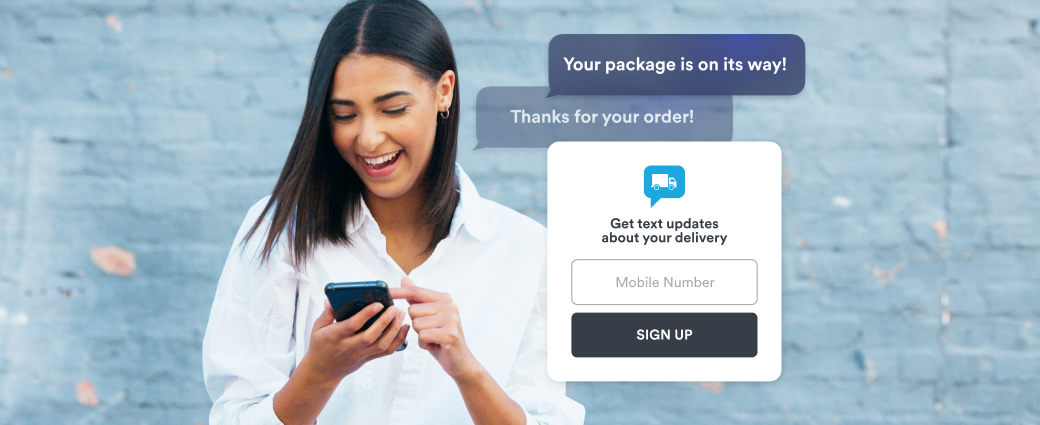
Your SMS and push programs reach only the shoppers who opted in. Ask at checkout and in My Account, and your delay alerts reach far more of them before peak.
Key takeaways
- Your SMS and push reach is set by your opt-in list, and the list is set by when and where you ask.
- A tracking-page-only ask misses every shopper who never tracks, and it arrives after the first updates have already gone out.
- Checkout, My Account, and the tracking page each capture a different shopper. Order-level and customer-level opt-in let one yes cover more orders.
- Hibbett's notification opt-in rose from 20.5% to 35.8%. On 100,000 peak orders, that is 15,300 more orders reachable by text.
Most enterprise retailers have already paid for the hard part of SMS and app push. The platform is contracted and the templates are approved. The carrier feed flags a late parcel before the shopper notices. Then peak arrives, a regional carrier backs up, and the delay alert goes out to a small slice of the people waiting on orders.
The constraint is the list. A text reaches only the shoppers who said yes, and push reaches only the ones who allowed it. How many say yes comes down to when and where you ask. Ask late, and your program stays small however good the messages are. Ask while shoppers are already handing you their details, and the same program reaches a far larger audience before the first holiday order ships.

A tracking-page-only ask misses every shopper who never tracks
Two enterprise retailers described the same setup to Narvar this year: the tracking page was the main place a shopper could sign up for text updates. That page should keep its opt-in. As the sole entry point, though, it screens out buyers before they ever see the ask.
To reach a tracking page, a shopper needs a shipped order and a reason to click. One of those retailers told Narvar plainly that not every customer tracks a package, so its opt-in rate had a ceiling. The other said only a low share of its packages receive SMS updates, because most of its opt-ins come from the tracking page.
The timing compounds the problem. By the time someone lands on the tracking page, the order confirmation and shipment notice are behind them. Any delay that surfaced early in fulfillment went out by email, or not at all.
Delays are common at peak. In the 2026 Holiday Shopping Report from Narvar and eTail Insights, 37% of US shoppers said a package arrived late last peak, and 37% saw the delivery date change after purchase.
That is where WISMO tickets come from. The shopper most likely to call you in December is the one whose parcel is late and who never heard about it. If that shopper never opted in, your delay alert has no number to go to, and the contact lands in your support queue.
Three moments when shoppers are ready to say yes
Shoppers agree to updates when the request fits what they are already doing. Three moments qualify, and each does a different job.
Checkout is your highest-intent ask
At checkout, the shopper is typing a phone number and watching the delivery date. A checkbox for text updates fits that task.
With Narvar Notify, the checkout opt-in travels with the order data you already send Narvar through the Order API. It applies at the order level, so one yes covers every shipment in the order. It also covers in-store pickups, return shipments and pre-shipment updates for retailers that send them. On a split shipment, the second and third boxes get the same updates as the first.
My Account turns one yes into a standing preference
The account page is where shoppers set preferences they expect you to remember. Notify supports customer-level opt-in: a shopper agrees once, and the preference carries to future orders. Narvar's notification preference center embeds in My Account and on the order confirmation page.
This is what enterprise teams mean by preference management. One retailer told Narvar its goal was to let customers opt in once at the profile level and never repeat it for each order. For a loyalty member who orders six times a year, that is six orders covered by one decision.
The tracking page catches everyone else
The tracking page stays in the mix because it reaches shoppers who skipped the earlier asks. Narvar's setup guidance for Track is direct: place the sign-up high on the page, and make SMS the default channel where it is enabled. A tracking-page sign-up also tries to subscribe the shopper to the full order before falling back to a single shipment. For retailers using Attentive or Vibes, the same sign-up collects consent for marketing texts in one step.
If your checkout roadmap is full this quarter, start where the work is lighter. Move the tracking-page sign-up above the fold and add a sign-up prompt to the shipment, delay and delivery-anticipation emails you already send. Put the checkout field on the roadmap for the quarter after peak.
What Hibbett's jump from 20.5% to 35.8% unlocks
Hibbett Sports launched ecommerce in 2017 and built its post-purchase program on Narvar Track and Notify from day one. The goal came from the top of the digital team.
"I really wanted to get past the 'buy' button and the order complete page."
--Bill Quinn, VP of Digital Commerce, Hibbett Sports
After Hibbett introduced its notification preference center, its notification opt-in rate rose from 20.5% to 35.8%, according to Narvar's Hibbett Sports customer story. The program went from reaching roughly one shopper in five to more than one in three. Hibbett also reported contacts per order down more than 20% after implementing Narvar.
Put that rate change against your own peak volume. At 100,000 holiday orders, a 20.5% opt-in rate puts text updates on 20,500 orders. At 35.8%, the figure is 35,800. That is 15,300 more orders where a carrier delay reaches the shopper by text before the shopper reaches your agents.
The shopper gains as much as the support team. In the same holiday report, 44% of US shoppers said order and delivery notifications would make them buy again. A bigger opt-in list means more shoppers hear about a delay from you first, and more of them come back for a second order.
Fix the ask while peak volume is still ahead of you
Opt-in changes pay off in proportion to the orders that flow through them. Four checks will show where you stand.
- Map every place a shopper can opt in to text updates today, and note when in the order each appears.
- Pull your order-level SMS opt-in rate from your messaging analytics as a baseline.
- Confirm whether opt-ins cover the whole order and future orders, or one shipment at a time.
- Find the tracking-page sign-up, and move it near the top if shoppers have to scroll.
The retailers who move their ask earlier this month go into December with a bigger list, fewer surprised shoppers and a lighter support queue. Wait until January, and those gains sit idle until next peak.
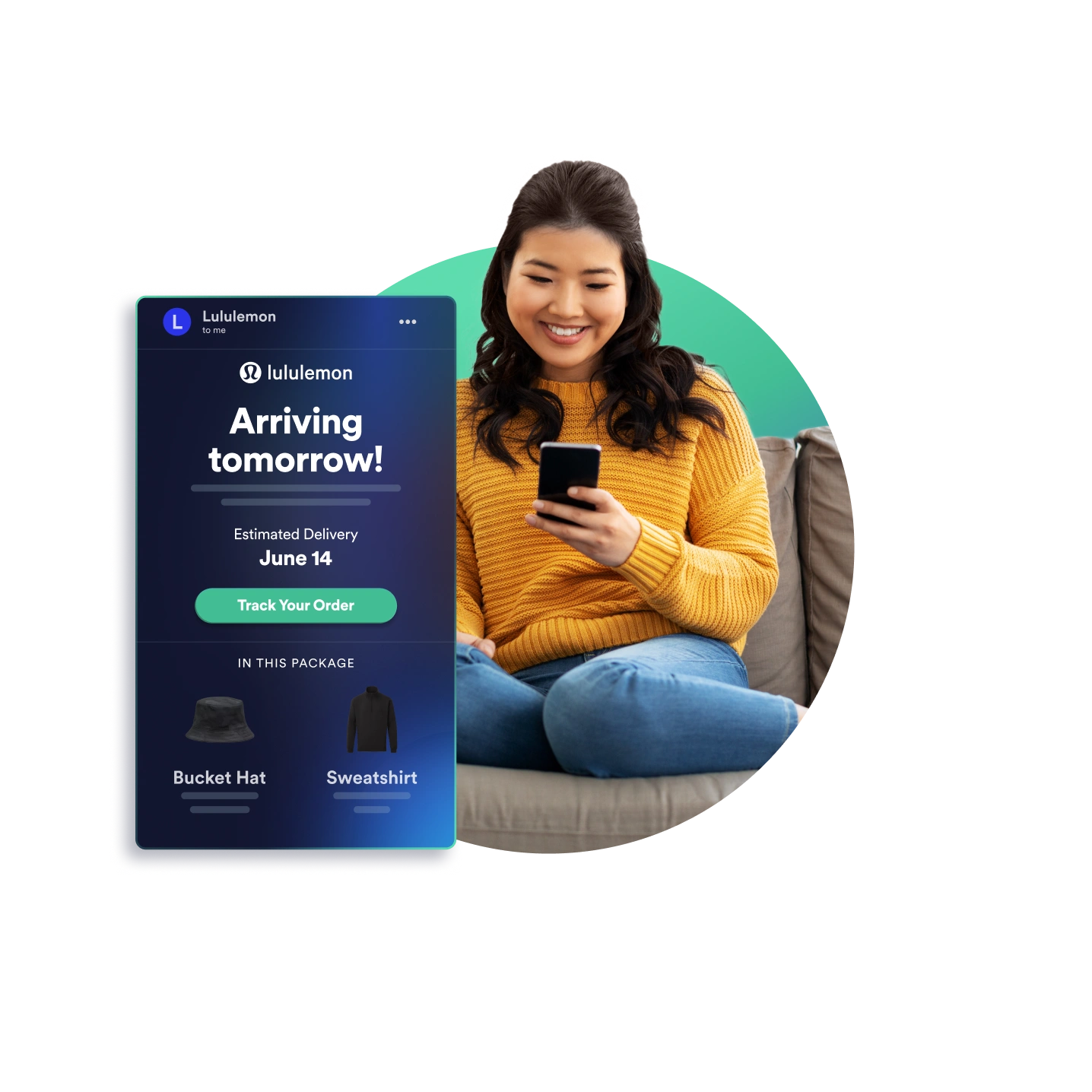
Learn to drive repeat customers by building trust.
Narvar Notify builds rapport through proactive communications every step of the way.

FAQs
Where should retailers ask for SMS opt-in?
Ask in three places: at checkout, in My Account, and on the tracking page. Checkout catches shoppers at peak intent. My Account sets a standing preference for future orders. The tracking page catches shoppers who skipped both.
Does adding SMS opt-in at checkout require a rebuild?
The checkbox lives in your checkout. With Narvar Notify, the opt-in then passes to Narvar inside the order data you already send through the Order API. If checkout work has to wait, start with tracking-page placement and prompts in your existing transactional emails.
What is the difference between order-level and customer-level opt-in?
An order-level opt-in covers every shipment, pickup, return and pre-shipment update in one order. A customer-level opt-in carries the shopper's preference to future orders, so they agree once.
Can the same sign-up capture marketing SMS consent?
Yes. For retailers using Attentive or Vibes, the tracking-page sign-up collects consent for marketing texts alongside order updates.
How does SMS opt-in affect WISMO volume?
A shopper who opted in gets the delay alert before they think to contact you. Hibbett reported contacts per order down more than 20% after implementing Narvar, with notification opt-in at 35.8%.
Related posts